PUNTOS de Salud is now R e n i a
Acupuncture Needles: 7 Things to Know
Acupuncture needles: discover what they are made of, their different sizes, how they are used and what you may feel during a session. Learn about hygiene, safety precautions and what to expect from acupuncture at Renia in Palma de Mallorca.
TRADITIONAL CHINESE MEDICINE
Salva Gianfreda
5 min read
Have you ever wondered what acupuncture needles are made of, how large they are or what you might feel during a session?
If you have never tried acupuncture, it is natural to have questions about the needles. Although they may seem intimidating at first, the needles used in acupuncture are very different from those commonly used to administer injections.
Here are seven things worth knowing to help you understand what acupuncture needles are like, how they are used and what to expect during a Traditional Chinese Medicine session.
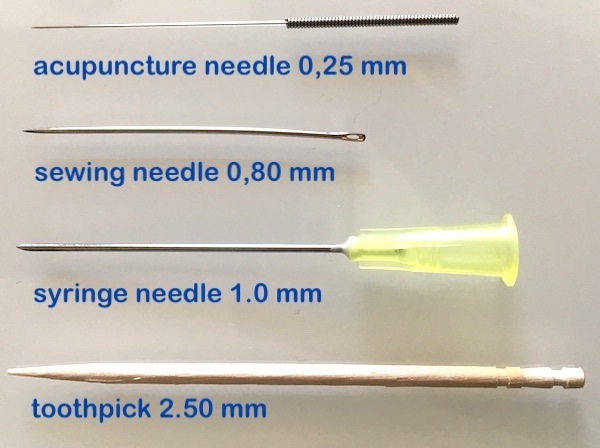
1. They are much thinner than injection needles
Acupuncture needles are very fine. Their diameter varies depending on the type of needle, but many are only a fraction of a millimetre thick.
Unlike hypodermic needles, which are specifically designed to inject liquids, acupuncture needles are designed for insertion into specific points on the body.
The sensation varies from person to person and according to the area being treated. You may notice a small prick, pressure, tingling or a localised feeling of heaviness. Some people barely notice the insertion, while others experience greater sensitivity.
The important thing: a session should be adapted to your tolerance. If you experience significant pain or discomfort that concerns you, tell your practitioner.
2. They are usually made from stainless steel
Modern acupuncture needles are generally made from medical-grade stainless steel. They are designed to be fine, strong and suitable for their intended use.
Many modern needles are sterile and supplied in individual packages. Some have handles made from other materials, depending on the model.
Although needles are designed to facilitate controlled insertion, people do not all tolerate them in the same way. It is also important to tell your practitioner if you have any known allergies to metals or other materials.
3. Acupuncture needles should be sterile and single-use
Hygiene is essential in any procedure involving penetration of the skin.
At Renia, acupuncture needles are used only once and disposed of after the session in accordance with applicable clinical waste procedures. They are never reused between patients.
Using sterile, single-use needles reduces the risk of infection transmission, although no procedure that penetrates the skin is entirely risk-free.
If you have any concerns, you can ask your practitioner about their hygiene and safety measures. You should expect needles to be opened from their individual packaging for your treatment and disposed of appropriately afterwards.
4. They come in different lengths and thicknesses
Not all acupuncture needles are the same size. Their length and diameter can vary according to the manufacturer, the area of the body and the technique being used.
Shorter needles may be used in certain superficial areas, while different lengths may be appropriate for other parts of the body.
Choosing a needle is not simply a matter of deciding how deep to insert it. It also requires knowledge of the anatomy of the area and the use of an appropriate technique.
At Renia, needles are selected according to the characteristics of the treatment and the area being treated. A longer needle does not necessarily mean that the insertion needs to be deeper.
5. Insertion depth depends on the area being treated
It is understandable that the idea of inserting needles into your skin may make you feel uneasy. However, insertion depth varies according to the acupuncture point, the anatomical region and the technique used.
Some insertions are superficial, while others require greater depth. There is therefore no single depth that can be applied to every point on the body.
Safety depends on understanding the anatomy, selecting the appropriate points and using a suitable technique.
During a session, you may experience different sensations depending on the area and your individual sensitivity. You do not need to tolerate intense pain for a practitioner to carry out treatment.
If you are worried about insertion depth or have a fear of needles, mention it before the session begins. Communication helps your practitioner adapt the treatment to your needs.
6. They are lightweight and designed for precise insertion
Acupuncture needles have a fine, lightweight design that allows practitioners to place them precisely.
Their tips are designed to facilitate insertion into the skin. Even so, not everyone experiences the same sensation: some people feel a brief prick, while others notice pressure, tingling or a localised sensation while the needles are in place.
You may barely notice the needles once they have been inserted, but it cannot be guaranteed that treatment will be completely painless.
If you experience discomfort, dizziness, sweating or any sensation that concerns you during the session, tell your practitioner so they can assess what to do next.
7. Needles are just one of the tools used in Traditional Chinese Medicine
Acupuncture is one of the techniques used within Traditional Chinese Medicine (TCM). Depending on your individual circumstances and the suitability of each technique, a treatment may also involve other complementary approaches.
Cupping
Cups are placed on the skin to create suction. This traditional technique is used on different areas of the body and may leave temporary marks.
Moxibustion
This technique involves applying heat using moxa, a traditional preparation of mugwort, near specific areas of the body. Precautions are necessary to avoid burns.
Gua Sha
This traditional technique uses a tool to make controlled strokes across the skin. Pressure and technique should be adapted to the individual.
Laser acupuncture
This technique uses low-level laser light to stimulate specific points without penetrating the skin with needles. Its suitability depends on the individual situation and the available evidence for each application.
At Renia, the approach is not to use the same technique for everyone, but to consider which options may be appropriate for each person. These techniques have different characteristics, precautions and levels of supporting evidence.
A brief look at the history of acupuncture needles
Acupuncture has a long history in China. The materials and tools used have changed over the centuries, from ancient instruments made from materials such as stone to modern metal needles.
Today's needles allow for more standardised use and are available in different sizes and designs. However, a long history does not, by itself, prove that a treatment is effective. Effectiveness must be assessed according to the indication and the available scientific evidence.
What can you expect at your first acupuncture session?
If you have never tried acupuncture, you do not need to know all the technical details before attending.
At Renia, your first session lasts 90 minutes. It provides an opportunity to discuss your situation, carry out an assessment from a Traditional Chinese Medicine perspective and begin treatment when appropriate.
Before starting, you can explain any concerns, your sensitivity to needles and any previous experiences that make you anxious. It is also important to mention medication, bleeding disorders, pregnancy or other relevant circumstances so that the necessary precautions can be considered.
Acupuncture can cause adverse effects, including local pain, minor bleeding or bruising and, occasionally, dizziness. Serious complications are uncommon when acupuncture is performed correctly, but it is important to choose a suitably trained practitioner who follows rigorous hygiene procedures.
Conclusion
Acupuncture needles are fine, lightweight tools designed for use at specific points on the body. Their size, insertion depth and the sensations experienced during treatment can vary according to the area, the technique and the individual.
If you are curious about Traditional Chinese Medicine, understanding how needles are used and which safety measures should be followed can help you make an informed decision.
At Renia, acupuncture forms part of a personalised Traditional Chinese Medicine approach, alongside other techniques that may be considered when appropriate.
VISIT
Gilabert de Centelles 19, 5th floor
07005 Palma
Monday - Saturday
By appointment only
CONTACTS
Renia ® 2026. All rights reserved.
Legal Notice | Privacy & Cookies Policy | Medical Disclaimer
"Renia offers traditional Chinese medicine as a complementary therapy. It does not replace medical diagnosis or treatment. Please consult your doctor for any health concern."